Ostara Meaning and Rituals (2026) | Spring Equinox Wisdom, Goddess Energy & Modern Meditation
Mar 19, 2026What Is Ostara?
Ostara is the Spring Equinox festival in many modern Pagan and Wiccan traditions. It honors balance, renewal, fertility, and the return of light, and it's commonly linked to the Wheel of the Year and to the figure of Eostre or Ostara, a Goddess associated in later tradition with dawn and spring.
Quick Read
Ostara is a seasonal threshold. It arrives with the Spring Equinox, when day and night stand in near equality. In the opposing hemisphere, this same equinox corresponds to Autumn and is more often honored as Mabon within the Wheel of the Year. Modern Ostara practice blends seasonal ritual, ancient symbolism, and contemporary spiritual practices such as altar work, flower offerings, egg symbolism, time in nature, journaling, and meditation.
When the World Turns Toward Light
There are moments in the year that feel almost architectural, as though the sky itself has designed a doorway. Ostara belongs to one of those thresholds.
At the Spring Equinox, the world arrives at a point of exquisite balance. Light and dark share the same sky in near equal measure. The season carries the feeling of first breath, first bloom, first movement after a long inward season. Across cultures, spring equinox celebrations have honored fertility, rebirth, and the return of life for thousands of years.
Ostara brings that turning point into spiritual language. It offers a name for the feeling many people already recognize in their bodies each Spring: a gentle stirring, a clearer current, a desire to open the windows, clear the corners, plant something, begin again.
Ostara on the Wheel of the Year
In modern Pagan and Wiccan practice, Ostara is one of the eight sabbats of the Wheel of the Year, the seasonal ritual calendar that includes the Solstices, Equinoxes, and cross-quarter festivals. Britannica notes that these sabbats draw from different strands of British and Irish history and became a defining structure in modern Pagan practice. Ostara marks the vernal Equinox in that cycle.
Ostara corresponds with the Spring Equinox. For readers in the opposing hemisphere, the same Equinox belongs to Autumn, and many practitioners look to Mabon as the seasonally aligned celebration instead. That global mirror is part of the beauty of the Wheel itself: one half of the Earth blooms while the other gathers.
The History of Ostara: Ancient Roots, Living Tradition
The historical story of Ostara is layered, part scholarship, part folklore, part living spiritual tradition.
One of the earliest written references comes from the 8th-century English monk Bede, who wrote that the name of Easter may derive from Eostre, associated with Eosturmonath, a spring month in the Anglo-Saxon calendar. Britannica notes that Eostre’s exact nature remains debated by scholars, while also recognizing her long-standing association in popular understanding with Spring.
Centuries later, Jacob Grimm helped popularize the German form Ostara, linking the festival more explicitly with a dawn or spring goddess in Germanic tradition. Modern Pagan practice then carried Ostara forward as the name of the Spring Equinox sabbat. That means today’s Ostara lives at the meeting point of old seasonal observance, medieval record, folkloric interpretation, and modern ritual creativity.
This layered history gives Ostara much of its magic. It carries the feel of something remembered through fragments: a name at the edge of history, a season turning, a body recognizing spring before the mind forms language around it.
The Dawn Goddess: Eostre, Ostara, and the Power of Emergence
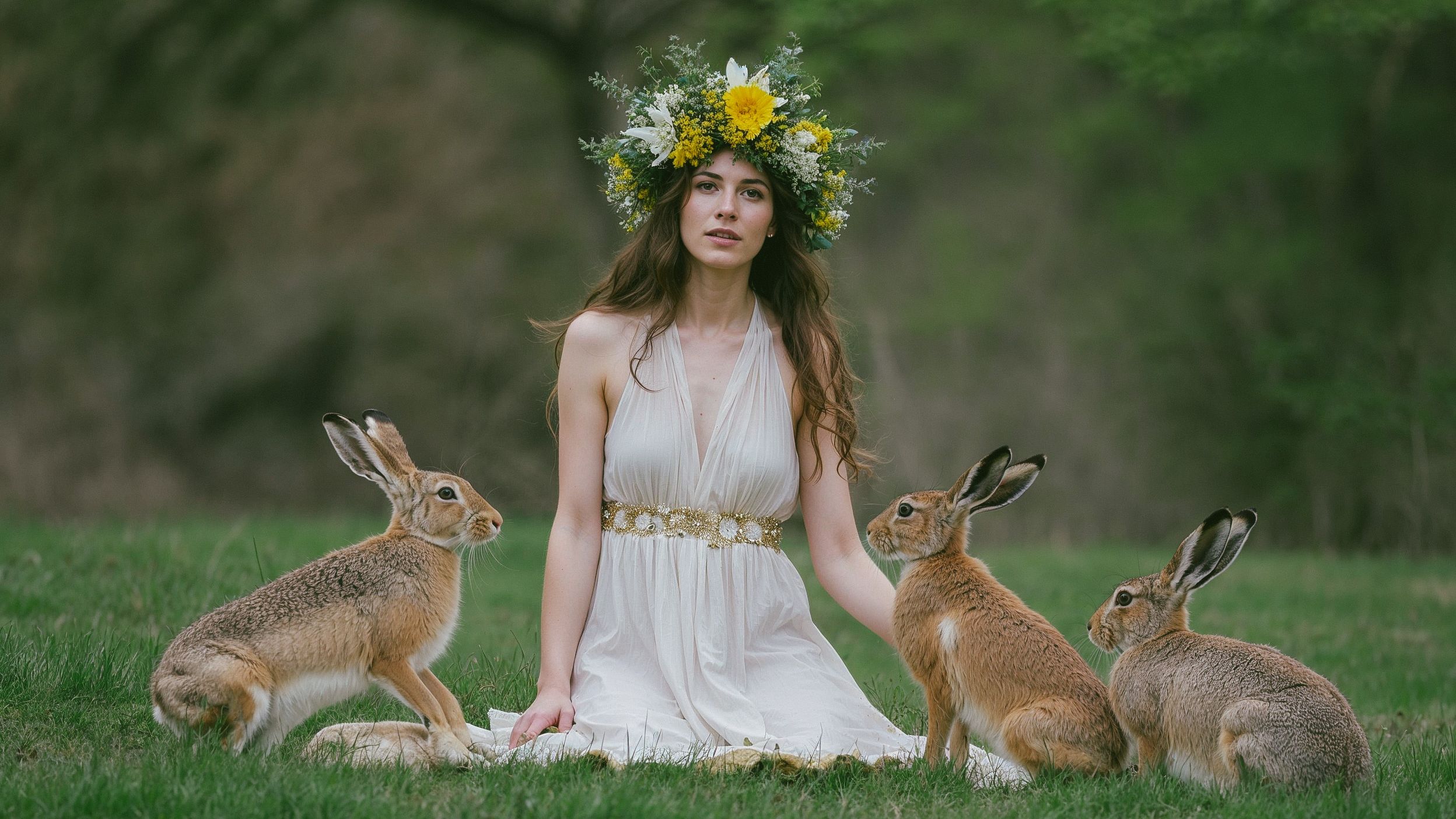
Whether one meets her as Eostre or Ostara, the goddess associated with this season carries the symbolism of dawn, renewal, and life returning. Britannica describes Eostre as possibly associated with spring, while later traditions and modern Pagan literature deepen her symbolism through images of sunrise, fertility, eggs, flowers, and hares.
Dawn is such a powerful spiritual image because it lives between worlds. It is both arrival and unveiling. It does not rush. It reveals. That is Ostara’s medicine.
In a human life, Ostara can feel like:
-
the first clear yes after a long season of uncertainty
-
fresh energy moving through the body
-
tenderness meeting courage
-
ideas sprouting into form
-
beauty returning to the places that once felt dormant
This is one way to understand the phrase “your inner Ostara.” It speaks to the part of the psyche that knows how to rise, how to soften toward light, how to trust emergence. As a spiritual metaphor, Ostara lives anywhere renewal, hope, beauty, and creative life begin to stir again.
Ancient Symbols of Ostara: Eggs, Hares, Flowers, and Light
Many of the symbols linked with Ostara appear across Spring traditions more broadly: eggs, rabbits or hares, chicks, blossoms, greenery, and sunrise imagery. These symbols express fertility, new life, and abundance. World History Encyclopedia notes that modern Ostara observance often includes eggs, rabbits, flowers, and feasting, while history highlights how Spring Equinox customs around the world have long centered rebirth and renewal.
An egg is such a perfect seasonal emblem because it holds potential in visible form. A hare carries vitality, movement, and fertility. Flowers announce the season before words ever could. Light itself becomes ritual language as the days lengthen.
Taken together, these symbols create a sensory theology of spring: something is opening and something beautiful is on its way.
Ostara in the Modern World
Today, many people live far from agricultural calendars, yet the body still responds to the season. Light changes. Energy shifts. Homes begin to open. Closets get cleared. Seeds appear in grocery aisles and on windowsills. Even spring cleaning carries ancient roots in seasonal renewal practices.
That is part of why Ostara continues to resonate. It translates ancient wisdom into modern rituals that fit contemporary life.
A modern Ostara practice might include:
-
creating a simple altar with flowers, candles, eggs, or greenery
-
opening windows and blessing the home
-
journaling on what is ready to grow
-
taking a sunrise walk
-
cooking seasonal foods
-
planting seeds
-
meditating with the intention of balance and renewal
This is where old wisdom meets present-day rhythm. The essence stays the same: welcome life, honor balance, nourish what is beginning.
Why Meditation Belongs to Ostara
Meditation may be one of the most elegant modern Ostara rituals because it mirrors the season so beautifully.
Ostara carries balance. Meditation cultivates balance.
Ostara welcomes new life. Meditation creates space for new life to be heard.
Ostara opens the season. Meditation opens the inner field.
A Spring Equinox meditation can support:
-
emotional renewal
-
nervous system steadiness
-
spiritual reflection
-
creative vision
-
embodied balance
Within the language of your work, meditation becomes a way to meet Ostara from the inside out. It allows the season to move through the body instead of remaining an idea in the mind.
Equinox Meditation | Balance Your Energy & Reset Your Chakras
How Ostara Looks and Feels Within Us
Ostara within the body feels bright, tender, and alive.
It can look like:
-
making room for beauty
-
choosing fresh energy
-
returning to devotion
-
trusting a new beginning
-
feeling inspired to care for body, home, and spirit
It can feel like:
-
a soft rise of hope
-
warmth moving into the chest
-
a clearer sense of direction
-
a renewed relationship with life
-
willingness to begin before everything is fully formed
This is where Ostara becomes more than a festival. It becomes a living archetype of emergence.
Ostara Ritual Ideas for 2026
For readers who want practical ways to honor Ostara, these rituals carry both ancient symbolism and modern relevance:
1. Create an Ostara altar
Use flowers, pastel cloth, eggs, seeds, candles, or a bowl of fresh water. Let the altar reflect beauty, fertility, and the return of light.
2. Work with sunrise
Greet the dawn with breath, prayer, silence, or a warm drink. Dawn is one of Ostara’s most resonant symbols.
3. Plant something
Seeds embody possibility. Herbs, flowers, or even a small houseplant can become a living ritual.
4. Clean and bless your space
Seasonal cleansing has roots in cultures around the world. Let the act become sacred: clear, sweep, open, refresh.
5. Practice a spring equinox meditation
Use meditation as a ritual of inner balance, emotional renewal, and spiritual listening.
6. Journal with Ostara prompts
Try:
-
what is ready to bloom in my life?
-
where is life inviting me into fresh energy?
-
what wants my care this season?
Ostara as a Spiritual Practice of Renewal
The deepest gift of Ostara may be this: renewal does not require spectacle. It asks for attention.
A flower opening toward light.
A seed trusting the dark before the green shoot rises.
A person choosing to begin again with tenderness and intention.
That is Ostara’s living wisdom.
Ostara FAQ
What does Ostara mean?
Ostara is the Spring Equinox festival in many modern Pagan and Wiccan traditions. It represents balance, renewal, fertility, and the return of light.
Is Ostara an ancient holiday?
Ostara as a modern equinox sabbat is part of contemporary Pagan practice, while its roots draw on older spring observances and on later interpretations of Eostre or Ostara from historical and folkloric sources.
Who is the goddess Ostara?
Ostara, often linked with Eostre, is understood in later tradition as a goddess of spring or dawn. The historical evidence is limited and much of her modern symbolism comes through later interpretation and contemporary spiritual practice.
What are common Ostara symbols?
Eggs, hares, flowers, seeds, greenery, and sunrise imagery are among the most common symbols connected with Ostara and spring equinox celebration.
How do you celebrate Ostara today?
Modern Ostara celebrations often include altars, seasonal meals, egg symbolism, gardening, sunrise rituals, home cleansing, journaling, and meditation.
What is the Southern Hemisphere equivalent of Ostara?
Within the Wheel of the Year, the March equinox aligns seasonally with autumn in the Southern Hemisphere, so many practitioners honor Mabon at that time instead of Ostara.
Ostara Belssings!
Ostara offers a vision of life returning with grace.
It lives in the first blossom, the brightening horizon, the bowl of painted eggs, the windows opened to fresh air, the body remembering how to hope again.
It also lives in the quiet inner places where renewal begins before anyone else can see it.
That is the enduring beauty of this season.
The world turns toward light.
And something within us rises to meet it.
May this meet you exactly where you are.
I’ll see you under the Moon and Stars.
— Crystal
Crystal Heinemann is the founder and CEO of The Psychic Soul, a spiritual wellness brand and app offering guided meditations, intuition development, and a heart-centered community with weekly live workshops and lunar cycle practices. Her work supports emotional regulation, stress relief, and energy mastery—helping people take responsibility for their energetic input and output so they can live from overflow, not survival.